Friday, 5 April 2019

It's not too late to make fitness changes

Image result for never too late to start over

A comprehensive study of over 300,000 adults has found that "middle-aged couch potatoes" starting to exercise can lower the risk of early death just as if they had been fit from their teens.

The recommended weekly leisure-time activity - 150 minutes of moderate aerobic work, or 75 minutes of vigorous exercise - cuts the risk of early death by up to 43%.  But those who were keen exercisers in early adulthood, and then gave up, lost all the health benefits they had gained!!

Dr. Pedro Saint-Maurice, of the National Cancer Institute in the United States said:
" we specifically found that being inactive across early adulthood, but increasing activity later, at 40 to 61, was associated with the risk reduction in mortality.  Therefore, our findings suggest it is not too late for adults to become active.  These benefits held similarly for both men and women, and were independent of any changes in BMI."

HMHB loves introducing our service users to different experiences around physical health - movement, flexibility and exercise. It's not just about having access to a gym - you can be fitter just by walking outdoors and do various exercises at home, preferably with a friend. We make it fun and groups can help to motivate and encourage. Give yourself realistic goals and encourage others to push you towards them. It does not have to be a strain or an effort. The gains are obvious!!

Blood Pressure - what you need to know

Image result for napping clipart

"A nap is just as effective as taking a pill to reduce blood pressure", research suggests

Research by Dr. Manolis Kallistratos, from Asklepieion Hospital in Greece, working with 212 people with an average age of 63, found a daily 49 minute siesta (that sounds very exact!!) reduced their blood pressure. But is napping the answer? Or should we be looking at lifestyle?

Blood pressure is a measure of the force that your heart uses to pump blood around the body. It is measured in millimetres of Mercury (mmHg) and is given as two figures:
  1. systolic pressure - the pressure when your heart pushes blood out
  2. diastolic pressure - the pressure when your heart rests between beats
Therefore if you had a measure of 100 over 70 it would mean you had a systolic of 100mmHG and a diastolic of 70mmHg


Systolic blood pressure should ideally be 90-120mmHg.
Diastolic blood pressure should ideally be 60-80mmHg
High Blood pressure is considered to be 140/90mmHg or above
Low blood pressure is considered to be 90/60mmHg or below.

The British Heart Foundation reported that cutting down on salt and alcohol, maintaining a healthy weight, together with regular exercise, were best for keeping your blood pressure normal.They also saw the "napping" research and said in response:
"as tempting as it is to nap, making healthy life choices  remains the key to preventing heart attacks, strokes, hypertension and various cancers, along with taking appropriate medication when recommended and prescribed".

Advice from the author of "The Little Book Of Sleep"

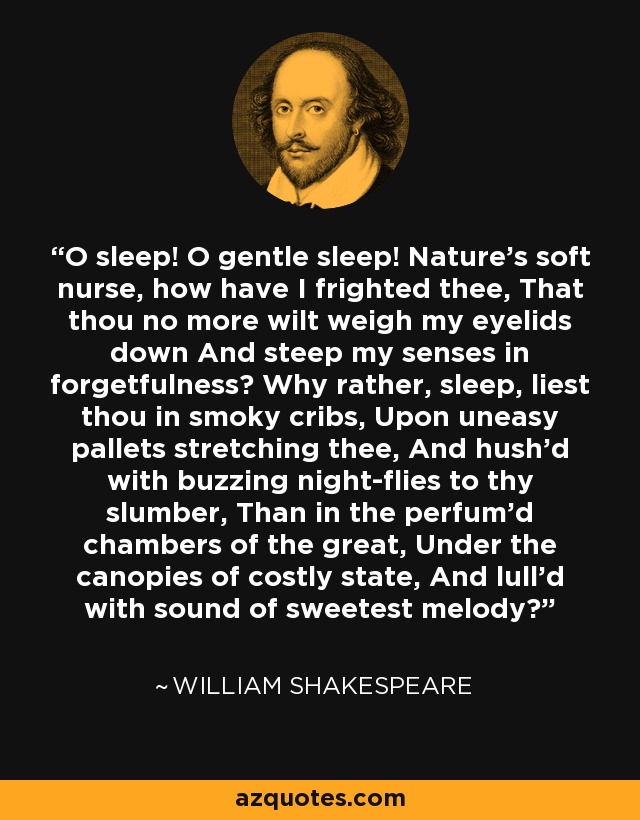
Image result for shakespeare quote about sleep

HMHB can empathise with anyone when it comes to problems surrounding sleep. We do not think there is any one magical solution. You have to try and find something that works for you. But it is recognised there are some elements you do need to try and control.

Dr Nerina Ramlakhan suggests a few things there that may help - but do not sue us if you still cannot improve!!!

  1. Eat breakfast within half an hour of waking, if possible. Certainly within one hour. If you are sleep deprived, you need to stabilise your blood sugar levels and stop your body running onn adrenalin in the mornings. Treat your body like you are running a marathon. Make sure you introduce some slow burning carbs, and include protein too.
  2. Do not substitute food with caffeine. Ideally, do not have caffeine after 3pm as it can affect your body for five to six hours, and if you are a sensitive sleeper consider stopping it after 12pm.  Incidentally, HMHB were told of research that many people believe they need caffeine in the morning to wake them up. However when some were given caffeine free coffee in an experiment, it acted as a placebo. The people believed they were getting caffeine, so expected to have more energy.
  3. Keep well hydrated. You will get a better quality sleep, even if you are not getting as many hours as you would like.
  4. Try and have an early night at least three times a week. If you need to read do so, but do not take electronics into the bedroom. Leave that phone outside. Blue light from the phones and tablets can stimulate the brain.
  5. Be active. Get outdoors. Experience more fresh air. Take short walks. Push yourself to do more. It may sound obvious, but this will wear you out more, but try and avoid looking at your phones so much.
  6. Try and avoid looking at the time. This can add to stress when you worry about how long you have left to sleep.
  7. If you do wake early, try and stay as relaxed and drowsy as you can. Concentrate on your breathing - even think about mindfulness (but do not use a phone app!!)
Yes, all this sounds great, but there are no quick remedies. HMHB is not an advocate of drugs and medication, unless it is absolutely necessary. Look at the death of Michael Jackson. People can get focused so deeply on sleep issues it is almost as if that can be a factor itself. It's easy words to say people should relax and destress. If you do have problems that are affecting your life, go and see your doctor.

Performimng 'press ups' can save your life!!

Image result for press ups clipart

Now there is a bold statement. Press ups are one of the most hated of exercises. But it can reap 
benefits. Let's have a look!!

Apparently, being ab le to do more than ten press ups cuts the risk of heart disease and strokes.
A study found that men who could bang out 21 to 30 in one go lowered the threat of cardiovascular disease by about 75%.  And those who could perform more than 40 slashed their risk by an astonishing 96%. Even those who doing as few as 11 were found to have better heart health compared to those who could not manage over 10.

This study was the first time this exercise had been used to predict future cardiovascular problems.  The US study began in 2000 and involved 1104 firefighters with an average age of 39.6.  They were monitored over 10 years with 37 of them ending up with cardiovascular symptoms. 36 of them struggled to perform over 40 press ups.

It is an interesting conclusion. HMHB knows how hard press ups can be. But with practice you can improve your strength and stamina. Press ups do not have to be on the floor. You can do them against a wall, whilst standing. And there is a sit down version, where you put your hands either side of your waist and raise yourself up.

Are bursts of exercise better for you?

Image result for exercise bursts of activity

HMHB likes to promote HIIT exercises - High Intensity Interval Training - which can come in many different forms and games.

The object is to push hard on an exercise for an amount of time (say 30 seconds), then have a small rest (say 15 seconds) before another burst of exercise, and keeping this interval boost going for a few reps.  Here is why!!

Researchers from Britain and Brazil examined 36 separate studies involving more than one thousand people, and found that just 23 minutes of high intensity interval training was more effective than 41 minutes of a conventional workout. In fact, they suggested that short spurts of sweat-inducing exercise help shed more weight than going for a run or a long gym session. It led to 29 per cent more weight loss than traditional exercise.

HMHB has developed good links with UkActive - a fitness industry body, that reports on a lot of research around the world. Their CEO said: "these figures show the positive impacts of interval training on reducing weight and, with the UK battling a grave obesity crisis, this research should be welcomed."

There is a warning that HIIT came with increased risk of injury or strain on the heart. It is not for everyone. But it can be tailored around age, ability, and injuries.  The most important thing is to find a regime that is enjoyable and sustainable. Anything is better than nothing.

Wednesday, 3 April 2019

Fizzy diet drinks - can be risky?

Image result for fizzy diet drinks

"Two or more fizzy diet drinks a day have been linked to a doubling of stoke risk"

Researchers, who had their findings published in journal Stroke, based a study on 81000 women of Albert Einstein College of Medicine in New York.  Drinking 710ml or more a day of artificially sweetened beverages, such as Diet Coke, saw the risk of stroke increase by 23 per cent. Fort females without previous heart trouble or diabetes, or those overweight, the risk more than doubled..

The women were also 16 per cent more likely to die early from any cause.

The lead Professor, Yasmin Mossavar-Rahmani stressed they did not prove diet drinks actually caused stroke or heart problems. But she added that they may not be harmless.

HMHB says we should all be able to have what we want in moderation. It is all down to amounts and portion size, be that liquids or solids. Just be sensible!!

Sleep - a great medicine - but we don't know why

Image result for sleep clipart

Did you know that scientists actually don't know why we sleep?  Seriously!!

Here is a few words from a website called Live Science

Humans spend nearly a third of their lives asleep. Going without sleep will literally make you psychotic and, eventually, kill you. It's clear that shut-eye is crucial to the body's ability to function.  But no one knows what sleep actually does.
"It's sort of embarrassing," said Dr. Michael Halassa, a neuroscientist at New York University. "It's obvious why we need to eat, for example, and reproduce … but it's not clear why we need to sleep at all."
However, scientists from the Germany University of Tubingen have proved that sleep helps your immune system fight viruses and cancerous cells. Findings published in the Journal of Experimental Medicine show the team were able to monitor "T-Cells" - which attach themselves to infected cells and kill them. People who slept well had higher levels of the protein molecules that cement these T-Cells to their targets.
Study co-Author Dr. Luciana Besedovsky says "This is especially relevant in light of the high prevalence of sleep disorders and conditions characterised by impaired sleep, such as depression, chronic stress, ageing and shift work."
T-Cells are a type of white blood cell, and are critical for the immune system. They fight tumour growth, oxygen deficiency, stress related disorders, and many other conditions.